What happened to the Roanoke Colony is the oldest unsolved mystery in American history. In August 1590 a man named John White stepped ashore on Roanoke Island and found nothing.
Not abandoned. Not destroyed. Nothing.
The 118 men, women and children he had left three years earlier — including his own daughter and nine-day-old granddaughter Virginia Dare, the first English child born in the Americas — had simply ceased to exist. No bodies. No graves. No signs of violence. No hasty departure. Just empty buildings reclaimed by vegetation and one word carved into a post at the settlement entrance.
CROATOAN.
Four hundred and thirty-five years later, nobody has fully explained what it means.
What Happened to the Roanoke Colony — How They Got There
Understanding the disappearance requires understanding what an extraordinary gamble it was to put 118 civilians there in the first place.
This was not England’s first attempt at Roanoke. Previous expeditions had already established a pattern of failure — one colony abandoned, one group of soldiers left behind who were later found dead, killed after a series of violent confrontations with local tribes that the English had largely started. The Secotan tribe, whose entire village had been burned by English forces during an earlier expedition over a missing silver cup, had every reason to be hostile.
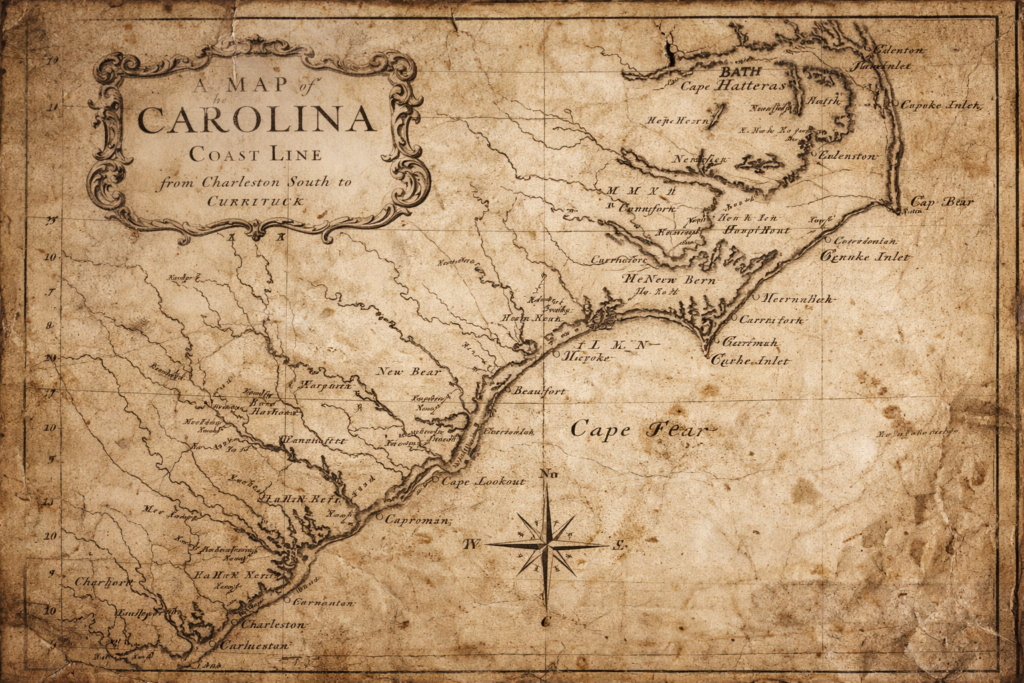
Despite this history, 118 colonists — not soldiers, but families, including pregnant women and children — departed England in May 1587. Their governor was John White, an artist and mapmaker who had documented the land and its people with illustrations that still exist today.
They never reached their intended destination. Their pilot Simon Fernandez refused to take them further than Roanoke Island — the same island with the troubled history — and offloaded the colonists without explanation. His reasons have never been satisfactorily established. He simply refused to continue and left them there.
They had no choice but to make the best of it.
The Governor Who Couldn’t Get Back
Within weeks the colony was in serious difficulty. A colonist named George Howe was killed by arrows while crabbing alone. The Secotan were openly hostile. The Croatoan tribe — friendly, and from whom the island took its name — were their only reliable allies.
The colonists made a collective decision. John White needed to return to England for supplies. He was deeply reluctant — his daughter Eleanor had just given birth to Virginia Dare. But survival required resupply and he was the only one who could arrange it.
He left in late August 1587 promising to return quickly.
What followed was not negligence but compounding circumstance. The Spanish Armada’s threat to England in 1588 led Queen Elizabeth to commandeer every available ship. No vessel could leave for the New World. When White finally secured passage in 1590 — three years after leaving — he arrived on a privateer ship whose captain prioritized plundering Spanish vessels over delivering a governor to his colony.
When White reached Roanoke in August 1590 the sun was already setting. He announced their arrival by sounding a trumpet and singing English songs across the water.
No response came from the island.
In the morning he found what remained.
What White Found — And What It Meant
The settlement was not destroyed. This detail matters more than it might seem.
The buildings had been deliberately dismantled. Heavy equipment had been removed. The palisade had been reinforced — more substantially than White remembered, as if fortified before being abandoned. No personal belongings were scattered. No signs of panic.
This was an organized departure not a massacre.
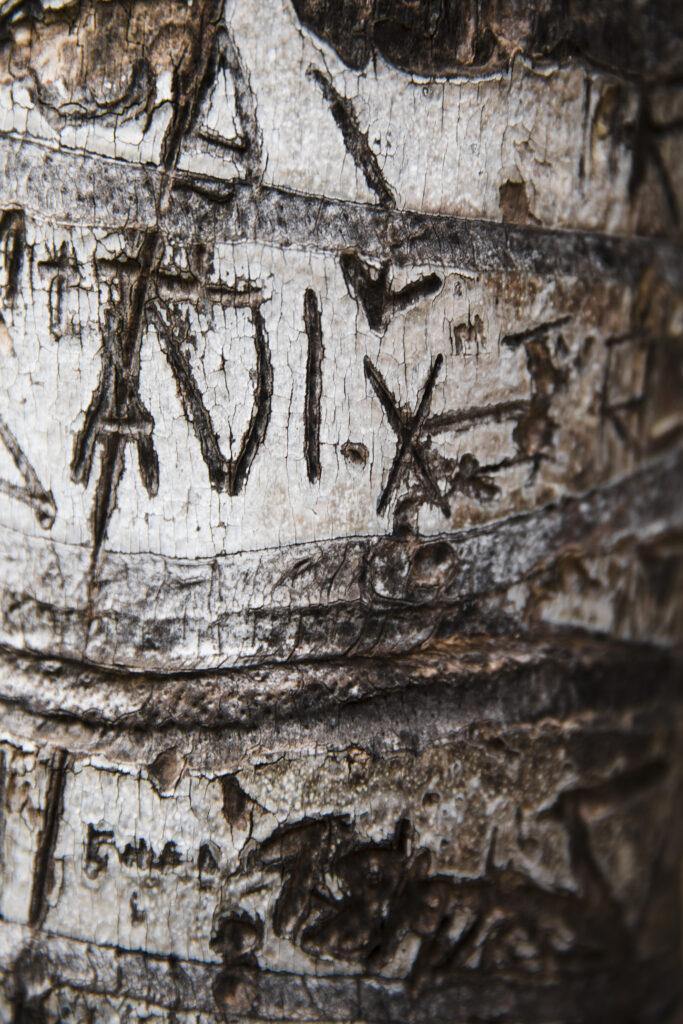
On a post at the entrance White found CROATOAN carved in capital letters. On a nearby tree the letters CRO had also been carved. Before leaving in 1587 White had arranged a signal system with the colonists — carve the destination if you relocate. Add a Maltese cross above it if you leave in distress.
There was no cross.
White immediately wanted to sail to Croatoan Island — modern Hatteras Island, fifty miles south — where the friendly Croatoan tribe lived. The weather refused. A storm drove their ships off course, damaged the anchor cables, and the captain decided to abandon the search and sail for the Caribbean.
John White never returned. He died around 1593 never knowing what happened to his daughter, his granddaughter or any of the 118 people he had left behind.
The Theories — And What 2025 Evidence Actually Shows
Every serious attempt to answer what happened to the Roanoke Colony has produced evidence that points somewhere without arriving completely.
What happened to the Roanoke Colony has generated four centuries of investigation. Here is where each theory currently stands.
Assimilation with the Croatoan — now the strongest supported theory
The most widely supported explanation among modern historians is that the colonists integrated with the friendly Croatoan people. New archaeological discoveries have significantly strengthened this position.
Excavations in March 2024 uncovered shards of Algonquian pottery dating back to the 1500s along with a ring of copper wire likely worn by an Algonquian warrior — made of drawn copper that Indigenous peoples did not have the technology to produce, suggesting it was brought by English settlers as trade goods. Power Digital
Then in April 2025 the evidence grew stronger. Archaeologists uncovered large amounts of hammerscale — small metal flakes which are a byproduct of iron forging — dated to the time period of the lost colonists at a location of Native American habitation. Metal-working was not within the technological culture of the natives, suggesting the colonists had encountered or joined the Croatoans and were assimilated into their community. Choice 360
History professor Kathleen DuVal of the University of North Carolina stated the hammerscale discovery backs up the most likely theory — that the lost colonists went to Hatteras Island and abandoned Roanoke. The Indigenous people of Croatoan wouldn’t necessarily have built a blacksmithing shop. Reader’s Digest
The colony split — a more nuanced picture
James Horn of the First Colony Foundation suggested a small group may have gone to Croatoan Island in the fall or winter of 1587 to wait for John White to return, while the remainder moved inland. Social Media Today This split theory reconciles multiple evidence streams that previously seemed contradictory.
Killed by the Powhatan Confederacy
Captain John Smith reported in 1607 that the Powhatan chief told him he had killed a group living in the Chesapeake area who had been with the Croatoan tribe. If accurate this means some colonists survived for over twenty years before being killed when the Powhatan consolidated power — making what happened to the Roanoke Colony a story not of sudden disappearance but of gradual, violent end.
Severe drought
Tree ring studies confirmed a devastating multi-year drought between 1587 and 1589 — potentially the worst in 800 years — which would have made survival on the island impossible and forced a decision to relocate regardless of other factors.
The Search That Never Stopped
The search for what happened to the English settlers has recently focused on the Elizabethan Gardens in Manteo, where researchers uncovered evidence of a farmstead belonging to the Algonquian village of Roanoke — an Indigenous community that hosted the explorers in 1584. History News Network
The First Colony Foundation has been conducting systematic excavations across multiple sites for years. In 2024 they resumed excavations at Fort Raleigh and revisited Site Y in Bertie County, reporting additional 16th-century English ceramics that bolster an inland-relocation scenario. Social Media Today
Each excavation season adds evidence. None of it yet adds up to a complete answer.
No English written records have been found at any site. No graves with identified remains. No document that says — we came here, we survived, this is what happened.
The evidence points toward assimilation. It does not yet confirm it.
The Part That Stays With You
John White documented the colonists in his illustrations — their faces, their names, the way they stood. His granddaughter Virginia Dare was nine days old when he left. She would have been three years old by the time the storm prevented him from coming back.
What happened to a three-year-old English girl on Roanoke Island in 1590 has no answer. Whether she grew up speaking a language her grandfather wouldn’t have recognized, whether she died in the drought, whether she was among those killed years later — nobody knows.
The 2025 hammerscale discovery on Hatteras Island is the closest archaeology has come to a definitive answer to what happened to the Roanoke Colony. It suggests the colonists went to Croatoan. It suggests they lived. It suggests they became part of something their governor never found because he never made it back.
The colony left one word.
Four hundred and thirty-five years of investigation has not yet turned that word into a complete sentence.
CROATOAN.
We went here.
Or — we tried.
Related on Dark History — explore the Dyatlov Pass Incident — another case that generated decades of investigation and produced no complete answers.
Sources & Further Reading
First Colony Foundation — active archaeological research into the Roanoke Colony disappearance First Colony Foundation
National Park Service — Fort Raleigh National Historic Site and major theories National Park Service